

The Surroundup
THE MARKET WAITS FOR NO ONE
- by Adil Mohammed, CFP®, CIM®, FCSI®
- April 28, 2026

Oh man… has it really only been a few months?
Remember the Venezuela headlines at the start of the year? Feels like years ago.
The Greenland story? Also, this year.
That alone tells you everything you need to know about markets and headlines.
What’s happened since my last update?
If you missed it, here was my last note: Assante Market Update – Relationship Between War & Markets
I wrote that at the start of the Iran conflict because it felt like things could get worse before they got better.
That part played out.
Markets declined through March — but importantly, they did so in a very orderly way:
- The U.S. market fell just under 10%
- It bottomed on March 30
- Most portfolios simply gave back January and February gains
And this is key:
Markets are supposed to go down.
A ~10% correction isn’t a crisis — it’s normal. It’s healthy. It happens most years.
It never feels normal in the moment. Add a war on top, and it feels even worse.
But if it wasn’t this… it would’ve been something else.
A GOOD REMINDER:
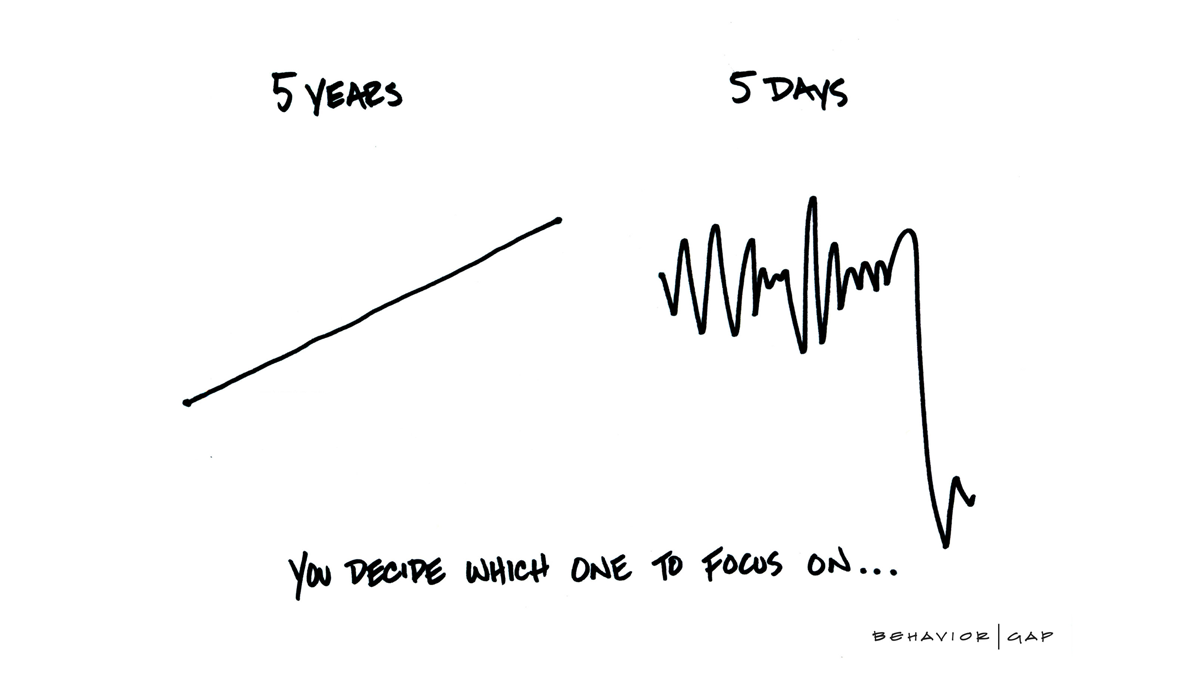
Where are we now?
Since March 30, markets have rocketed higher — back near all-time highs.
The March decline? Gone.
We always say:
- Markets take the stairs up
- And the elevator down
This time?
Markets took the stairs down… and the elevator back up.
The market waits for no one.
If you stepped aside thinking, “I’ll get back in when things calm down” — you’re likely still waiting.
Because yes — the war is ongoing, oil prices are elevated, gas prices are up…
But the market doesn’t ring a bell when it’s safe to get back in.
Timing the market means being right twice:
- When to get out
- When to get back in
The second one is what gets people.
How can markets be at highs… while the war continues?
It feels counterintuitive, but there are three big reasons:
1. MARKETS LOOK FORWARD, NOT BACKWARD
Markets don’t price what’s happening today.
They price what the world looks like 3, 6, 9, 12 months from now.
Right now, markets are telling us:
- The conflict is likely contained or resolves
- Oil stabilizes
- The economic impact remains manageable
2. THE CONSUMER IS STILL HOLDING UP
The U.S. consumer drives ~70% of the economy.
And so far, they’ve been resilient.
From recent Q1 earnings calls:
- Jamie Dimon (JPMorgan): “Consumers still earning and spending… businesses still healthy.”
- Brian Moynihan (Bank of America): “Solid consumer spending… resilient economy.”
- Visa: “Payment volume up 7%… reflecting resilience in spending.”
- Delta: “Demand for premium and international travel remains strong.”
Could this change? Absolutely.
But right now — the engine is still running.
3. EARNINGS MATTER MOST
This is the part I care about most.
Markets follow earnings.
During the March decline:
- Earnings didn’t fall
- Fundamentals didn’t break
What changed?
VALUATIONS.
Investors were simply willing to pay less for the same earnings.
Think of it like this:
Same iPad. Same features. 20% cheaper.
That’s what March was.
And now?
- Earnings expectations have increased
- Early results are coming in stronger than expected
So, the market adjusted… and then moved higher.
Could things go wrong?
Of course.
- The conflict could escalate
- Oil could stay elevated
- Higher costs could hit earnings
- The consumer could slow
- Policy changes (like a new Fed chair) could create volatility
All possible.
But none of that changes the core framework:
Short-term uncertainty is the price we pay for long-term returns.
One big reminder: Don’t anchor
Something I’ve heard in a few of my March meetings: “I’m down from where I was.”
But when we zoom out?
The portfolio actually up year-to-date — and meaningfully over time.
What’s happening?

They’re anchoring to the peak value.
That February high becomes the reference point.
Here’s the problem:
That number was never real — unless you sold.
And the same applies on the downside.
Portfolio values fluctuate. That’s the nature of investing.
If you anchor to every high, you’ll always feel like you’re losing.
Instead:
Judge progress over time — not from the last peak.
Final thought
Blake Millard said it well:
“We all imagine a straight path in investing – rational decisions, steady gains, predictable responses. Black and white.”
But the real world is messy. Emotions, surprises, and uncertainty tangle even the best-laid plans. Shades of gray.
The biggest risk to your financial plan isn’t the market. It’s abandoning the plan when it feels uncomfortable”
A good plan you can stick with beats a perfect one you can’t.
Every time.
Adil Mohammed, CFP®, CIM®, FCSI®
Wealth Advisor, CI Assante Wealth Management Ltd.
Mutual Fund Dealer
The opinions expressed are those of the author and not necessarily those of CI Assante Wealth Management Ltd. This material is provided for general information and the opinions expressed and information provided herein are subject to change without notice. Every effort has been made to compile this material from reliable sources however no warranty can be made as to its accuracy or completeness. Before acting on the information presented, please seek professional financial advice based on your personal circumstances. CI Assante Wealth Management Ltd. is a Member of the Canadian Investor Protection Fund and the Canadian Investment Regulatory Organization.